The first five years of a child’s life are often described as a period of rapid neurological development. During this window, the brain creates more than a million new neural connections every second, shaping the foundation for all future learning, health and behaviour. Because of this, the standard of care and instruction a child receives during these formative years is paramount. Understanding why quality early childhood education matters is the first step for parents looking to provide their children with the best possible start in life.
In Australia, the focus has shifted from “childcare” as a simple supervision service to a sophisticated educational model. Quality programmes are designed to foster curiosity, resilience and a sense of belonging, ensuring that children do not just occupy a space but actively engage with their environment and peers.
This transition reflects a broader understanding that the preschool years are not merely a prelude to “real” school but are a vital educational stage in their own right.
Building a Foundation for Lifelong Learning
The primary benefit of a high-quality programme is the cultivation of what educators call a “growth mindset”. When children are encouraged to explore, ask questions and solve problems through play, they develop a natural love for learning that lasts well beyond their primary school years. This is not about rote learning, flashcards or academic pressure; it is about creating a rich environment where a child feels safe enough to take risks, experiment and occasionally fail.
Expert educators play a critical role in this process. By recognising a child’s unique interests—whether it be dinosaurs, space or mud kitchens—they can tailor activities that challenge the individual while maintaining a sense of wonder and fun. This bespoke approach ensures that early childhood education becomes a launchpad for cognitive flexibility. When a child learns how to learn, they gain a toolset that assists them in every subsequent stage of their schooling, from the first day of Prep to the final exams of Year 12. These early experiences help to authorise a child’s sense of agency, making them active participants in their own developmental journey rather than passive recipients of information.
Socialisation and Emotional Intelligence
Beyond the basic ABCs and 123s, quality education provides a vital arena for social development and emotional regulation. For many Australian children, this is the first time they must navigate a community outside of their immediate family circle. They learn to socialise in a structured setting, discovering how to share resources, empathise with others and resolve conflicts through communication rather than physical frustration. This is particularly important in an age where digital screens often limit face-to-face peer interaction.
This emotional intelligence is a key predictor of adult success and general life satisfaction. A child who can recognise and utilise their emotions effectively is more likely to build healthy relationships and maintain mental wellbeing later in life. Quality educators prioritise these “soft skills” by guiding children through the complexities of group dynamics. By learning to collaborate on a complex block tower or negotiate the rules of a game in the sandpit, children develop the diplomacy, patience and leadership qualities required for modern life. Furthermore, a high-quality environment helps to minimise the anxiety associated with new transitions, providing a secure base from which a child can explore the wider world.
Closing the Gap and Future Success
Extensive Australian and international research, including long-term longitudinal studies, has shown that children who attend high-quality preschool programmes are more likely to achieve higher grades and hold stable employment in adulthood. This is particularly true for vulnerable children, as access to early childhood education can effectively bridge the gap between different socioeconomic backgrounds. By providing equal access to resources and professional pedagogy, we can ensure that every child, regardless of their postcode, has a fair go at success.
When a programme focuses on optimising a child’s strengths, it creates a ripple effect that benefits the entire nation. The advantages extend to the broader community through reduced need for remedial education services and increased workforce participation for parents and caregivers. By organising our society around the developmental needs of our youngest citizens, we ensure a more equitable, skilled and prosperous future for everyone. The investment made in these early years pays dividends in the form of confident, capable and contributing members of society who are ready to face the challenges of the 21st century.
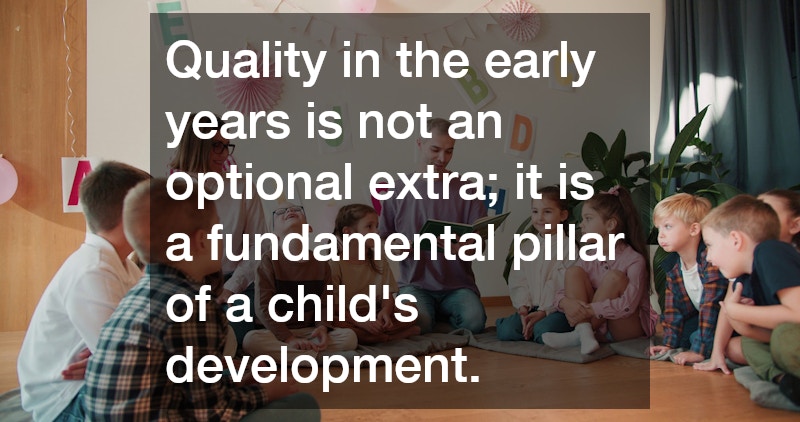
Quality in the early years is not an optional extra or a luxury for a few; it is a fundamental pillar of a child’s holistic development. Whether it is through the development of fine motor skills, the fostering of deep social bonds or the sparking of intellectual curiosity, the impact of a professional learning environment is profound and permanent.
As parents and caregivers, choosing a centre that aligns with these high standards is one of the most impactful decisions you can make for your family. By valuing the expertise of qualified educators and the immense importance of play-based learning, we give our children the sturdy foundation they need to build a successful, happy and fulfilling life. When we prioritise the quality of these early experiences, we are not just preparing children for school—we are preparing them for life.